
Bradford Institute for Health Research (BIHR)1 is celebrating the success of its Neonatal Research team at Bradford Teaching Hospitals NHS Foundation Trust (BTHFT), who are among the leading UK recruiters to two international clinical studies investigating whether oral insulin can safely support gastrointestinal development in preterm babies and help them reach full feeds sooner.
The studies – FIT‑PIV and FIT‑05, led globally by Elgan Pharma – are evaluating a neonatal‑specific formulation of oral insulin that aims to improve feeding tolerance and reduce complications related to intestinal malabsorption in preterm infants. Both studies are part of the National Institute for Health and Social Care Research (NIHR)2 portfolio.
Bradford has a long‑standing collaborative relationship with Elgan Pharma and is proud to be one of the top recruiting sites in the UK and the world, with 11 babies recruited as of January 2026.
This achievement reflects the Trust’s commitment to offering families in Bradford access to cutting‑edge neonatal research that has the potential to improve care for premature infants around the world.
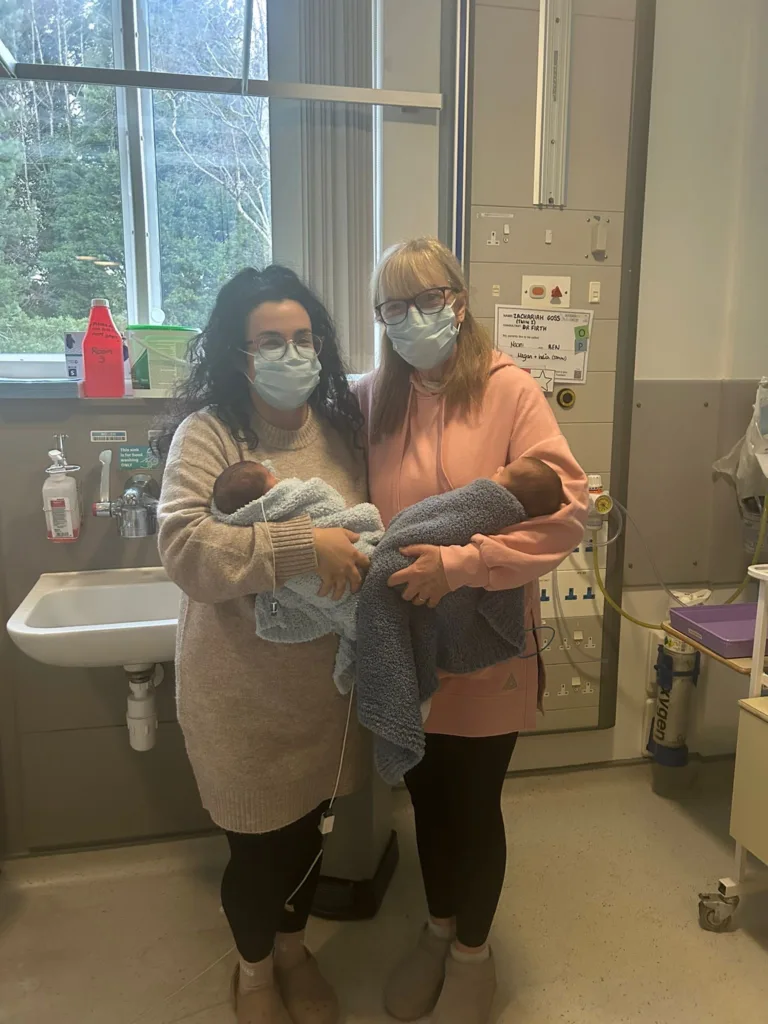
Dr Sam Oddie, Consultant Neonatologist and Principal Investigator at BTHFT, said:
“We are delighted to be able to offer preterm babies cared for in Bradford participation in this comparison of medical treatments. The therapy we are using is promising, based on our previous work. I am hopeful that this additional safe treatment will be an important step forward in how neonatal units all over the world look after babies. On a personal note, I am proud to work with a brilliant team that are enabling families to access this treatment, and I am excited to see the results.”
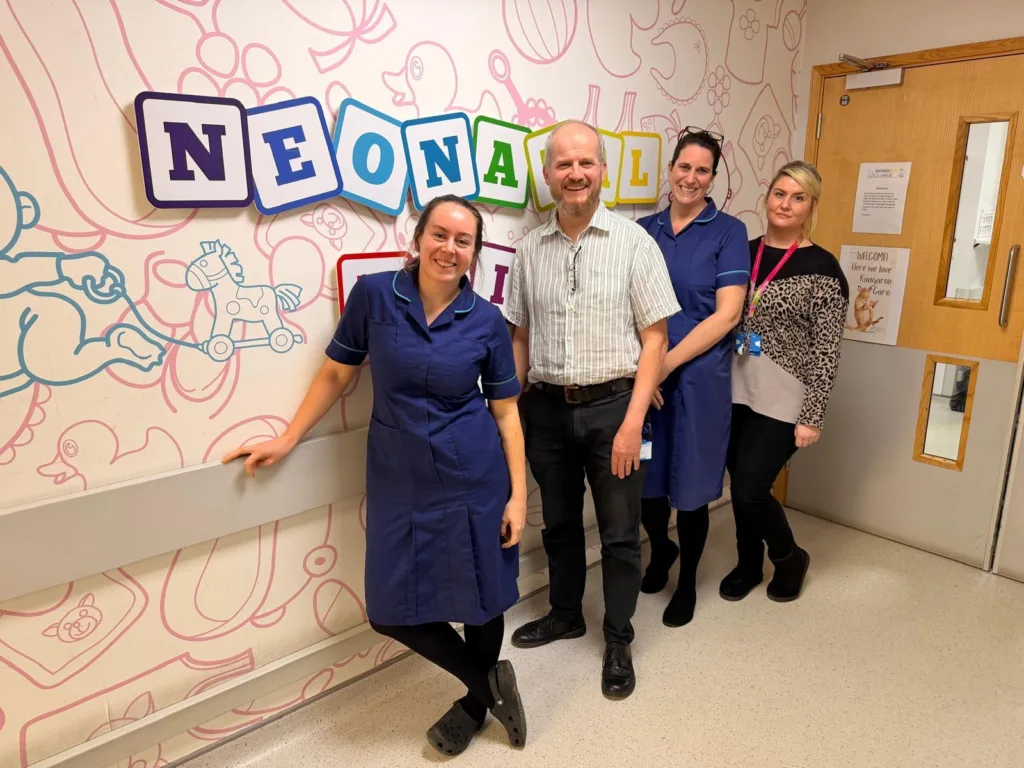
A mother whose twin boys were born prematurely at 27 weeks explains why she wanted to take part in the study:
“Sam (Dr Sam Oddie) came to see me and the boys two days after we came to NICU (Neonatal Intensive Care Unit) and he was really lovely. The way he explained the study to us, we thought why would we not be in this study as it just sounded like a great research project to be a part of for the boys. He told us that the study had been done before with loads of other babies, so we didn’t feel worried about it. He gave us lots of time to think about it, came back and asked us some more questions and gave us some more information – we didn’t feel pressured or anything. And this just seemed like a great thing for the boys to be in.”
Rachel Wane, Senior Neonatal Research Nurse at BTHFT said:
“It’s great that we are able to offer this study to our very early babies, we are grateful that families have chosen to join in, not only could it benefit their baby but also babies in the future.”
Miki Olshansky, CEO, Elgan Pharma said:
“We are proud to collaborate with the Bradford Neonatal Research team, along with other leading centres worldwide, in advancing this important research, which we hope will lead to improved outcomes for premature infants. Bradford’s strong recruitment performance is instrumental to the progress of our studies, including Dr Oddie’s achievement in enrolling the first infants worldwide into the FIT-05 study. Working closely with dedicated clinical teams such as those in Bradford enables us to develop innovative therapies for preterm infants while maintaining patient safety and wellbeing as our highest priority. We are grateful for the contributions of Dr Oddie, and the entire Bradford team and for their continued dedication to innovation in neonatal medicine”.
Why the study matters
Achieving full feeds earlier in life is a crucial step for preterm babies, supporting:
- Better growth and gut development
- Reduced time on parenteral (IV) nutrition
- Lower risk of feeding‑related complications
- Earlier readiness for discharge
Bradford’s contribution to this research will help generate evidence that could shape neonatal practice internationally for years to come.
Background
About the FIT-PIV and FIT-05 studies
The FIT-PIV study is a Phase 3 pivotal, multi-center, double-blind, randomized, two-arm, parallel-group, placebo-controlled study, designed to assess the efficacy and safety of ELGN-2112 on intestinal malabsorption in preterm infants. The study is designed to enroll 420 infants, born in 26-32 weeks and weighing at least 500g. The study is expected to open in approximately 50 sites in the United Kingdom, Europe, Israel and the United States. The FIT-PIV study is part of a comprehensive clinical development plan that includes additional studies, including the FIT-05 study, a multi-center, double-blind, randomized, placebo-controlled study designed to enroll around 60 infants born less than 26 weeks and at least 450g or infants born between 26 to 31+6 and below 3rd percentage.
The primary endpoint of the studies is the number of days to achieve full enteral feeding (FEF), which is a milestone associated with reduction of risks of complications.
Reaching FEF earlier means faster and more efficient development of the infant’s GI tract. Babies treated with ELGN-2112 in previous trials, including a first phase 3, have previously reached their nutrition goals earlier, their time on parenteral nutrition (PN) was shorter and had fewer complications.[1],[2] For additional information, please visit: https://clinicaltrials.gov/study/NCT05670951?term=FIT%20PIV&rank=1
About ELGN-2112
ELGN-2112 is a proprietary formulation of recombinant human insulin tailored for neonatal use, delivered enterally and compatible with infants’ nutrition. ELGN-2112 is expected to improve gastrointestinal function, increase absorptive surface area and enhance adaptation, thereby reducing the need for intravenous feeding and decreasing the risk of associated complications. Based on its consistent positive results shown across several clinical trials to date, ELGN-2112 can potentially become an important therapy for premature infants.
The novel formulation results in a highly soluble insulin powder for reconstitution, which allows for accurate, low doses, appropriate for preterm babies. It is compatible with all infant nutrition including mother’s own milk, donor breast milk and infant formulas and contributes to gut rehabilitation with no systemic exposure to insulin.[3]
Insulin is naturally present in amniotic fluid and breast milk during the first few days of life. There is evidence from studies that insulin has important physiological effects on intestinal growth, cell maturation, and enzyme expression and therefore improves the ability of the intestine to absorb nutrition. Upon birth, a newborn infant’s gastrointestinal tract is exposed to insulin via colostrum (breast milk in the first days of life). Importantly, in utero the gastrointestinal tract also exposed to the insulin present in amniotic fluid and consumed by the fetus, resulting in a constant influx of insulin stimulating the gastrointestinal tract. Insulin is one of mother nature’s tools for maturing an infant gastrointestinal tract for independence.
Find out more
More details about the FIT‑PIV and FIT-05 studies can be found on Elgan Pharma’s website:
For parents or professionals interested in participating or learning more locally, contact the Bradford Neonatal Research team: Childrensresearch.Nurses@bthft.nhs.uk
About Bradford Institute for Health Research (1)
Bradford Teaching Hospitals NHS Foundation Trust has a strong track record of research and has between 500-600 research projects ongoing per year. It is home to Bradford Institute for Health Research[1] (BIHR) which was established by the Trust in 2007 in recognition of the unique research partnership between the primary and secondary care NHS trusts in Bradford and Airedale and its local universities and local government. Since then, BIHR has developed and increased its expertise in clinical research and notably applied health research and provides a critical mass of research expertise in the Trust. Due to the unique coalescence of academic, practice and community strengths, BIHR has:
- An international reputation in applied research with a particular focus on child health, older people and quality and safety of health care including the Wolfson Centre for Applied Health Research2 , NIHR Applied Research Collaboration Yorkshire and Humber3 and NIHR Patient Safety Research Collaboration Yorkshire and Humber4.
- A strong track record in clinical research with ability to recruit patients quickly (global and national firsts) and deliver recruitment targets. BTHFT hosts the NIHR Bradford and West Yorkshire Commercial Research Delivery Centre, partnering with spoke sites, Mid Yorkshire Teaching NHS Trust and Calderdale and Huddersfield NHS Foundation Trust.
- World class community research cohorts. Born in Bradford5, the global-first experimental birth cohort study Born in Bradford’s Better Start and the Academic Unit for Ageing and Stroke Research (ASR) CARE 75+6 frail elderly cohort are leading the world in community engagement in research and translation of research into policy and practice.
- One of the leading improvement agencies, the Yorkshire and Humber Improvement Academy7, and one of the top patient safety teams the Yorkshire Quality and Safety Research Group8
- Whole system research. Bradford has an excellent track record of collaboration across health and education sectors and close co-production with patients and communities. In 2019 it was awarded a UK Prevention Research Consortium to establish an ActEarly ‘City Collaboratory’9 to tackle the wider determinants of health.
- Connected data. Bradford hosts the Connected Yorkshire10 programme that is working to enable safe and secure sharing and analysis of data to redesign pathways of care.
[1] https://bradfordresearch.nhs.uk
2 https://wolfsoncahr.uk/
3 https://www.arc-yh.nihr.ac.uk/
4 https://psrc-yh.nihr.ac.uk/
5 https://borninbradford.nhs.uk/
6 https://ageingstrokeresearch.org/
7 https://improvementacademy.org
8 https://yqsr.org/
10 https://bradfordresearch.nhs.uk/connected-bradford/
About the National Institute for Health and Social Care Research (2)
The mission of the National Institute for Health and Care Research (NIHR) is to improve the health and wealth of the nation through research. We do this by:
- Funding high quality, timely research that benefits the NHS, public health and social care
- Investing in world-class expertise, facilities and a skilled delivery workforce to translate discoveries into improved treatments and services
- Partnering with patients, service users, carers and communities, improving the relevance, quality and impact of our research
- Attracting, training and supporting the best researchers to tackle complex health and social care challenges
- Collaborating with other public funders, charities and industry to help shape a cohesive and globally competitive research system
- Funding applied global health research and training to meet the needs of the poorest people in low and middle income countries.
NIHR is funded by the Department of Health and Social Care. Its work in low and middle income countries is principally funded through UK international development funding from the UK government.