
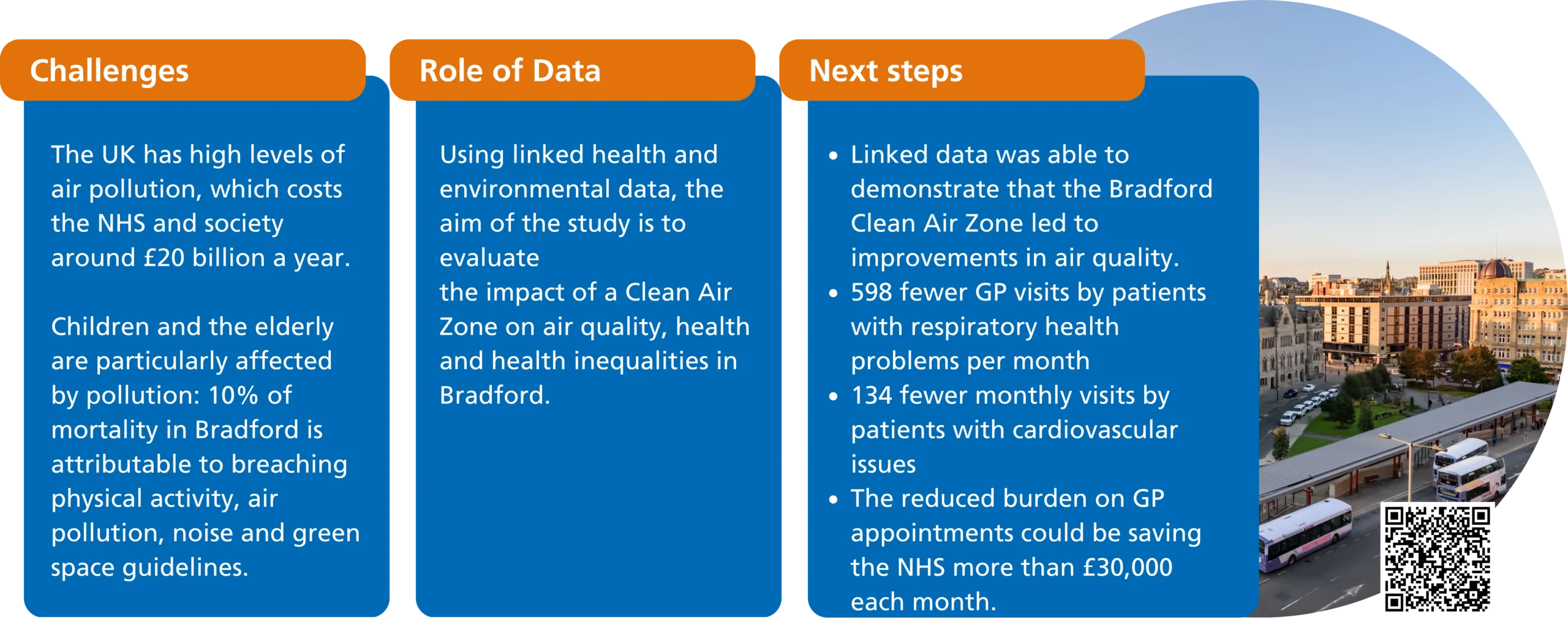
Breathing Better: Evaluating the Impact of the Clean Air Zone
Using linked health and environmental data, the study demonstrated that the Bradford Clean Air Zone led to improvements in air quality, fewer GP visits by patients with respiratory health and cardiovascular issues. The reduced burden on GP appointments could be saving the NHS more than £30,000 each month.
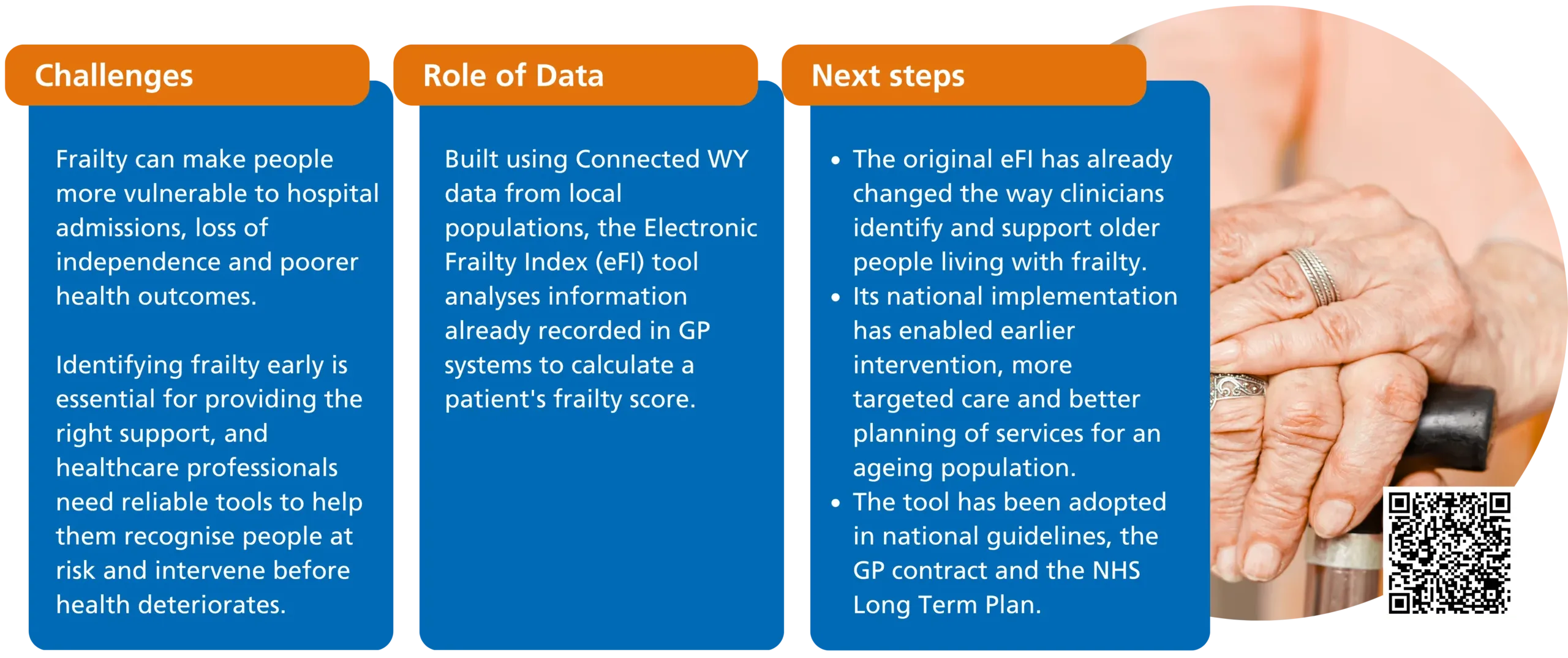
Electronic Frailty Index 2
The increasing prevalence of comorbidity and long-term conditions of older people is one of the challenges to the NHS. The electronic frailty index 2 is a diagnostic tool that uses existing NHS GP electronic health records to calculate a patient’s frailty score. It is developed using CWY data is now being rolled out nationally – made in Bradford and saving lives.
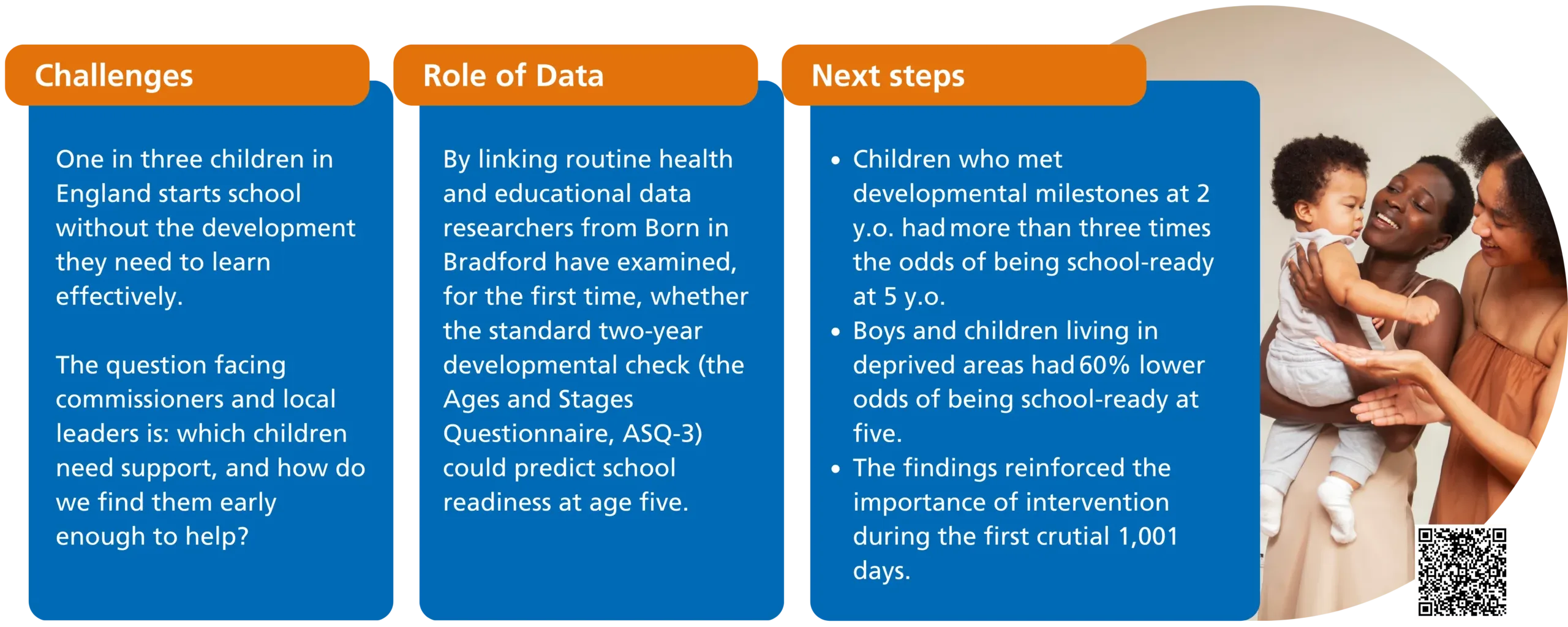
School White Paper
The local evidence used in the Department for Education’s Neurodivergence Task and Finish Group’s recommendations contributed to the Schools White Paper, including findings on how early developmental measures are linked to persistent school absence.
White Paper / Neurodivergence Task and Finish Group: report / IMPACT-CASE-STUDY
Health and Environmental Impacts
Connected WY has supported the analysis of individual-level environmental exposure measurements in Bradford to better understand the relationship between the built environment and health. This work led to the successful £8 million Healthy Urban Place grant award from the Medical Research Council.
Finding Children Who Need Support Before It’s Too Late
Linking health and education data demonstrated how Early Years Foundation Stage (EYFS) profile was a major predictor of ASD and ADHD diagnosis and special education needs. This has led to a redesign of services to provide early and targeted support, reducing years of delay and improving recording of data.
eFalls calculator
Our Academic Unit of Ageing and Stroke Research working with a team of collaborators, has developed a new calculator that can predict the risk of falling in the next 12 months. Using linked primary and secondary data from the CWY, the new eFalls calculator mean appropriate interventions can be provided for people identified at risk of falling over the next 12 month. This could reduce the number of hospital admissions or emergency department visits after a fall.
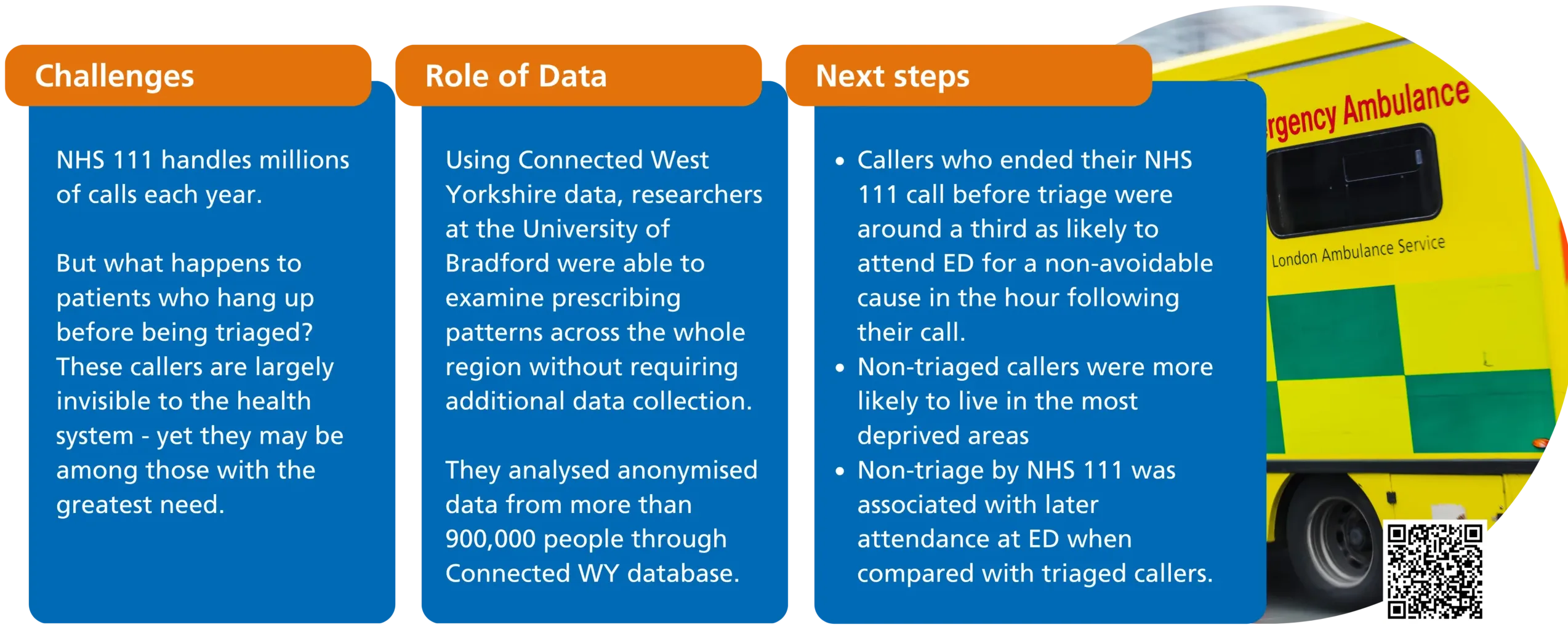
Who Falls Through the Cracks When Calling NHS 111?
Researchers at the University of Bradford examined prescribing patterns across the region and found that for patients with a serious health problem that would be considered non-avoidable at ED, triaging by NHS 111 was associated with a reduced time to ED attendance.
The Milburn Review
Alan Milburn’s review of Young People and Work drew on evidence from Born in Bradford research around including findings on how early school readiness predicts later risk of being Not in Education, Employment or Training (NEET).
Young people and work: interim report
CLASS-ACT Study
The Classroom Air Cleaning Technology (CLASS-ACT) study tested portable HEPA air filters in Bradford primary schools and showed that cleaner air can help reduce illness and improve school attendance.
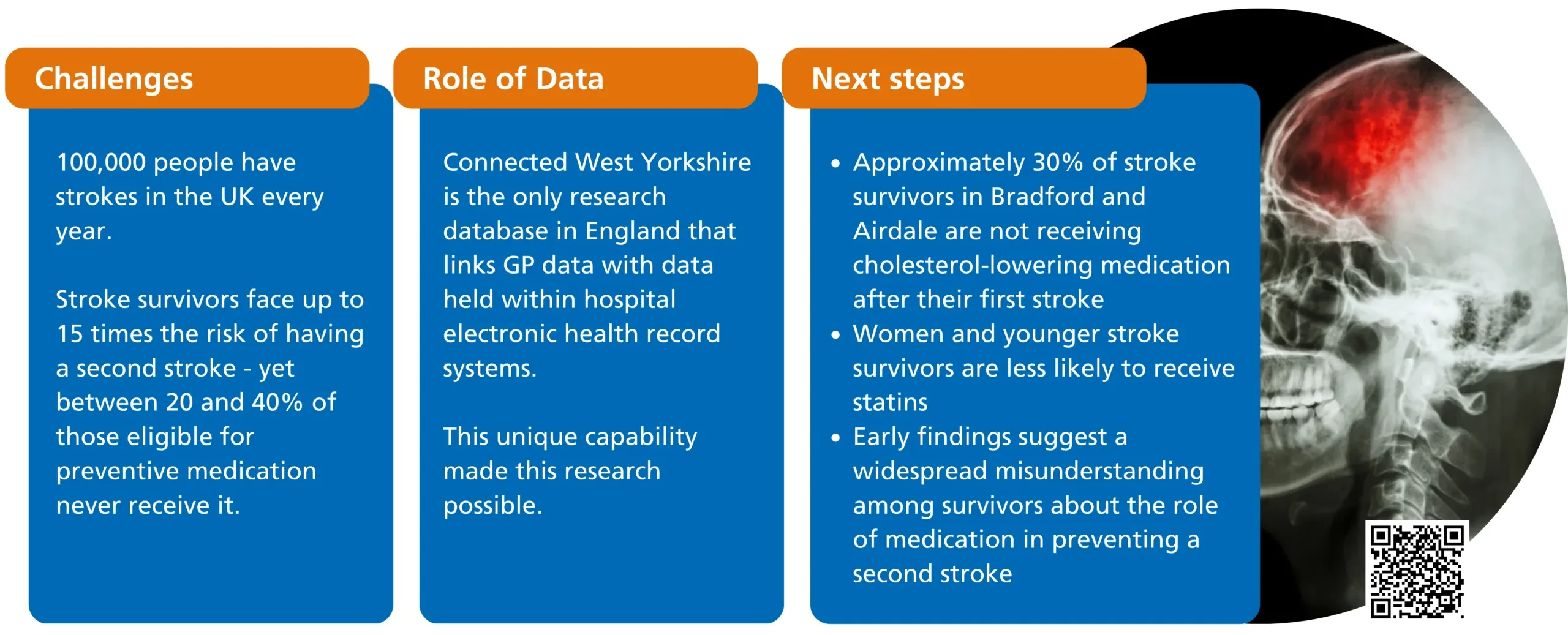
Closing the Gap in Stroke Prevention
Using Connected WY data, researchers analysed health records from more than 900,000 people to investigate stroke prevention across Bradford and Airedale. The study found that up to one-third of eligible stroke survivors may not be receiving vital medications that can significantly reduce the risk of a second stroke, with women and younger people particularly affected.