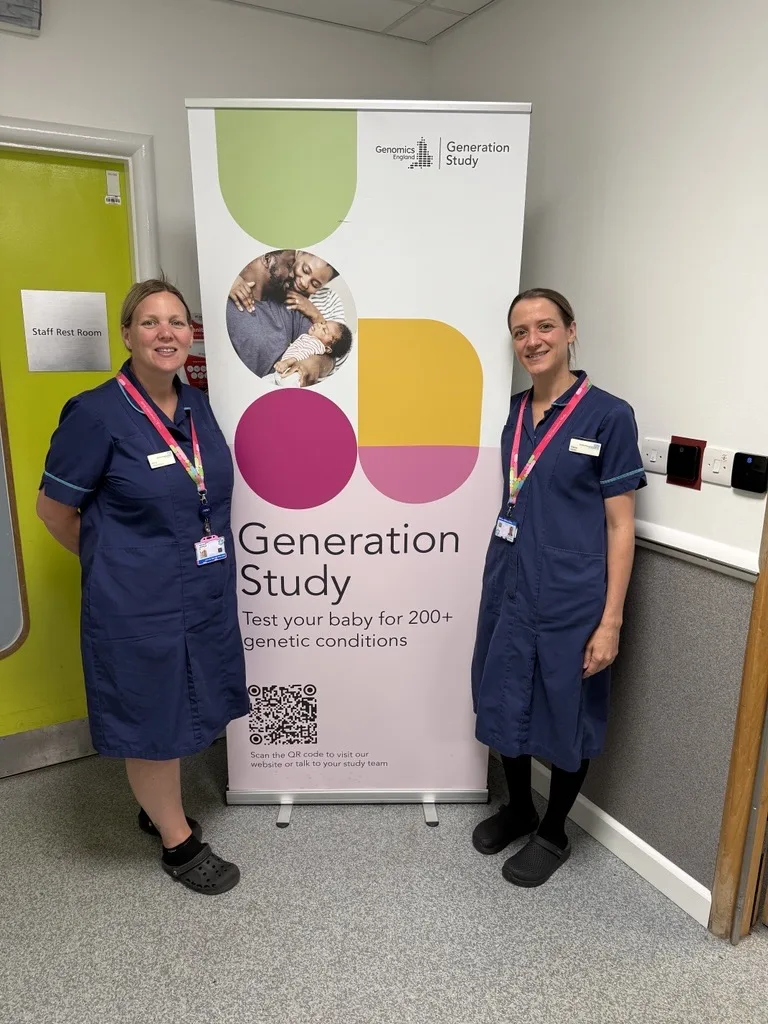
Research midwives in Bradford have enabled more than 1,500 women to join the Generation Study, marking a significant milestone for the national research programme.
The achievement reflects the dedication, innovation and hard work of the Bradford research midwives and maternity teams, who have worked tirelessly to raise awareness of the study and support families to take part.
The Generation Study is a national research programme that aims to identify rare genetic conditions in newborn babies as early as possible, enabling affected babies to receive timely treatment and support. The study is also helping researchers learn more about genes and health, which could lead to improved testing, diagnosis and treatment for genetic conditions in the future. Participating babies are tested for more than 200 rare genetic conditions all of which are treatable by the NHS.
The Bradford research team has adopted a range of innovative approaches to engage families and raise awareness of the study. Research midwives regularly attend antenatal clinics, the ultrasound department and antenatal inpatient areas where they speak directly with expectant parents about the study and answer any questions they may have. As well as attending local events and family groups such as toddler groups.
A key factor in the study’s success has been its accessibility. Promotional materials are available in multiple languages, helping to engage families from Bradford’s diverse communities. The maternity service’s access to interpreters has also supported recruitment among women whose first language is not English, ensuring more families have the opportunity to learn about and participate in the study.
Jenny Butler, Research Midwife and Principal Investigator for the Generation Study in Bradford, said:
“Enabling more than 1,500 women to take part in this study is a fantastic achievement for Bradford and the team. It demonstrates the commitment of both our team and the families who have chosen to take part. By participating in the Generation Study, families from Bradford can access genetic testing through the programme, helping babies receive treatment more quickly if a genetic condition is identified. “
Anisa, a participant of the generation study said:
“It feels really important to take part in the Generation Study as it’s helping to find out more about how detecting conditions early can make sure babies get the help they need sooner.”
Professor Rich Scott, Chief Executive Officer, Genomics England, said:
“We believe genomics can transform healthcare in this country and be used to get ahead of serious illness. It’s been incredibly moving to see the lifechanging impact the Generation Study is having for families. Every year thousands of babies are born in the UK with rare genetic conditions, but they can be hard to diagnose. On average, it takes around five years for a rare condition to be diagnosed, at which point it has often progressed to the point where treatment, if it exists, is far less effective.”
The milestone highlights Bradford’s important contribution to a study that could help shape the future of newborn screening and improve healthcare outcomes for children and families across the UK.
About the Generation Study
The Generation Study is a national research programme investigating whether genomic sequencing can be used to screen newborn babies for rare genetic conditions. By identifying conditions earlier, the study aims to improve health outcomes for babies and families while advancing knowledge that could shape the future of healthcare and genetic medicine.
To be eligible for the study, women must be pregnant, aged 16 or over, and expecting a single baby.
For more information about the Generation Study, visit: https://www.generationstudy.co.uk/